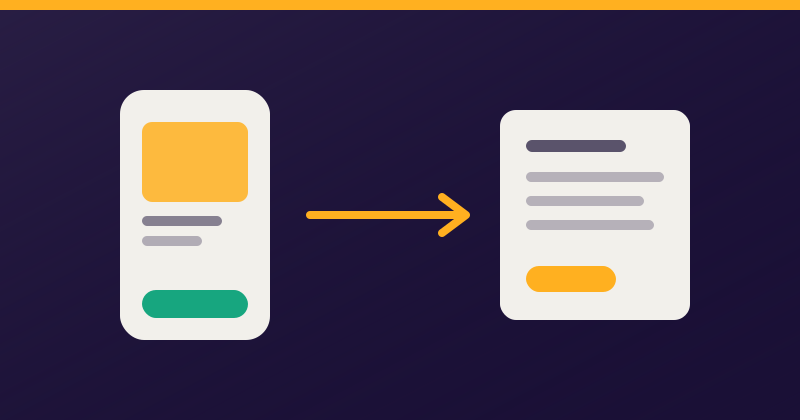
Selling through a website means the customer browses your products, picks the size, colour and quantity, writes their address and sends the order themselves, at any hour, without waiting for you to reply. You do not stop talking to your customers; you stop piecing orders together from scattered messages.
How the order goes, from the customer's side
All of it without "how much?", "is it available?" or "send me your address".
What changes in your day
The order arrives complete
Instead of building the order from five messages, it arrives written down: product, option, quantity, address and amount. We explain why that builds the customer's trust in Why an itemised order builds more trust.
Stock counts itself
The quantity goes down with each order, so you never sell a piece that has run out. When an order is cancelled or returned, the quantity comes back automatically.
Every order has a clear stage
Pending, confirmed, completed, cancelled, returned. At any moment you know what is waiting for confirmation and what is out for delivery.
Your customers become a list
Every order is linked to the person who placed it, so you build a record of your customers' names, numbers and past orders. That list is exactly what gets lost when selling stays in chat.
Where do the visitors come from?
A website does not bring people on its own. Visitors come from where people already know you:
Our free tools help here: a WhatsApp link and QR code generator for people who visit your shop.
Payment and delivery
In Iraq most buyers pay cash on delivery, and some transfer in advance. Roowaj does not collect money for you: you agree on a method, then mark the order paid in the dashboard. Details in How to get paid from your online store.
Delivery stays with your own courier or the delivery company you already use, and the website works out the fee by governorate. From the Business plan you can connect the store to a delivery company and send orders to it from the dashboard.
When a website alone is not enough
If your business depends on long negotiation over every piece, or on made-to-order products whose specification changes each time, conversation will remain a large part of selling. Even then, a website helps by showing past work and typical prices, but it will not replace the talking.
To start now, follow the steps to create a website to sell your products.
Frequently asked questions
Do I have to leave Instagram or WhatsApp to sell through a website?
No. The website is a link you put in those accounts and send in chats. Customers find you where they find you today and order through the link.
Does Roowaj take a cut of sales?
No. There is no commission on orders on any plan, however many there are.
What happens if I go over my plan's orders?
You are notified and the store keeps taking orders for a margin, then stays visible without new orders until next month or an upgrade. Nothing is deleted.
Does the website work in Arabic and English?
Yes. The storefront and dashboard are in Arabic and English, with Arabic as the default.